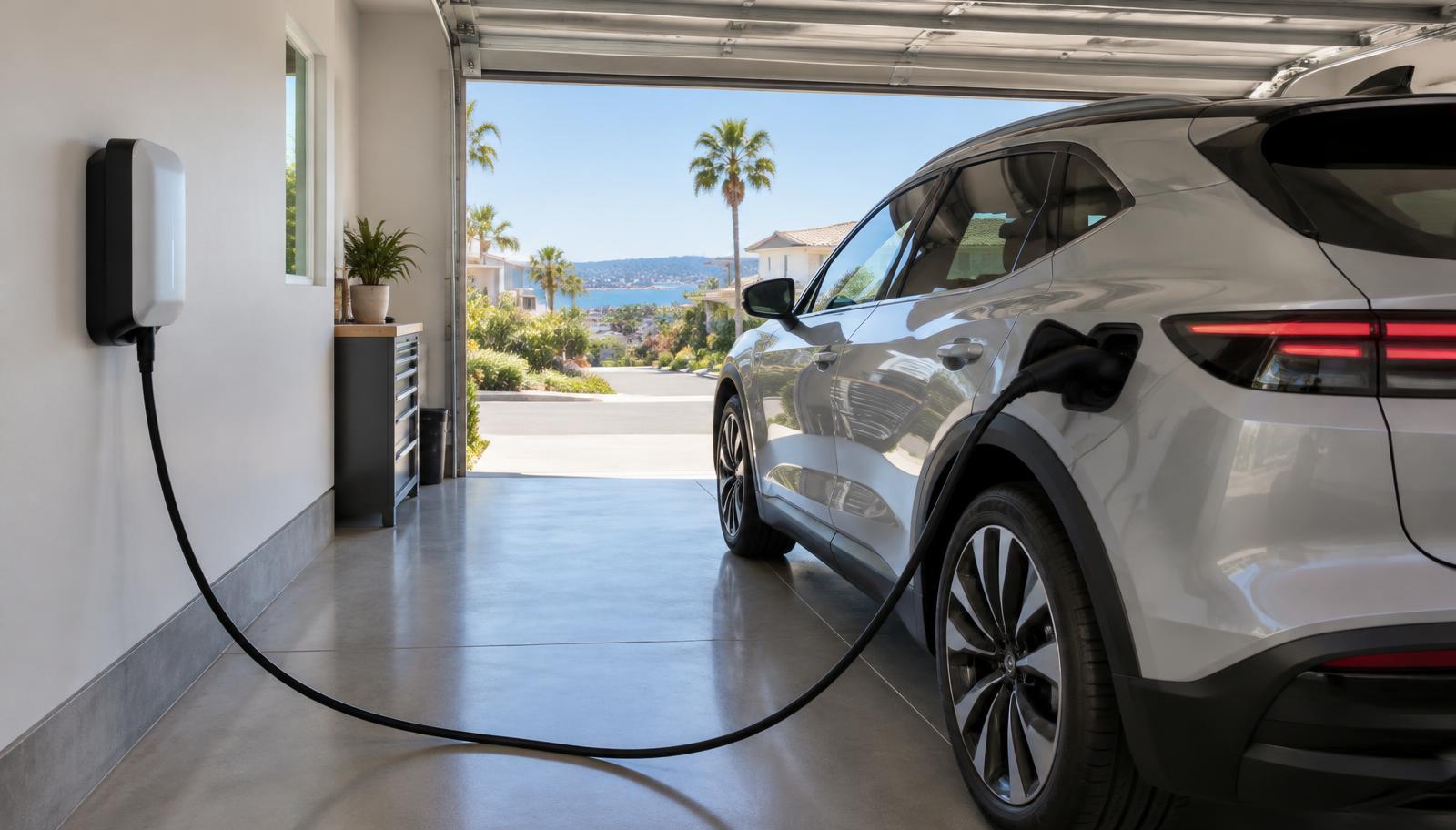
Installing a Level 2 EV charger at home allows San Diego homeowners to charge vehicles where they park, often overnight.
However, installing a charger involves more than attaching equipment to a garage wall. The property's electrical capacity, circuit requirements, charger location, and permitting process all influence the work.
If you're planning EV charger installation in San Diego, understanding these factors can help you make informed decisions before purchasing equipment or scheduling electrical work.
/What Is a Level 2 Home EV Charger?
A Level 2 EV charger uses a 240-volt electrical supply to charge compatible electric vehicles faster than a standard 120-volt household outlet.
For many homeowners, Level 2 charging is practical for regular overnight charging. Actual charging speed depends on the vehicle, equipment, circuit capacity, and other conditions. A properly installed charger can reduce the need to use public charging stations.
/Do You Need an Electrician to Install an EV Charger?
A qualified electrician is strongly recommended. Many Level 2 installations require a new dedicated circuit, properly sized conductors, suitable overcurrent protection, and evaluation of the home's electrical capacity.
Work must comply with applicable codes and permitting requirements. A licensed electrician can evaluate compatibility and make sure the installation is suitable for the expected charging load.
/Does Every Home Need a Panel Upgrade for EV Charging?
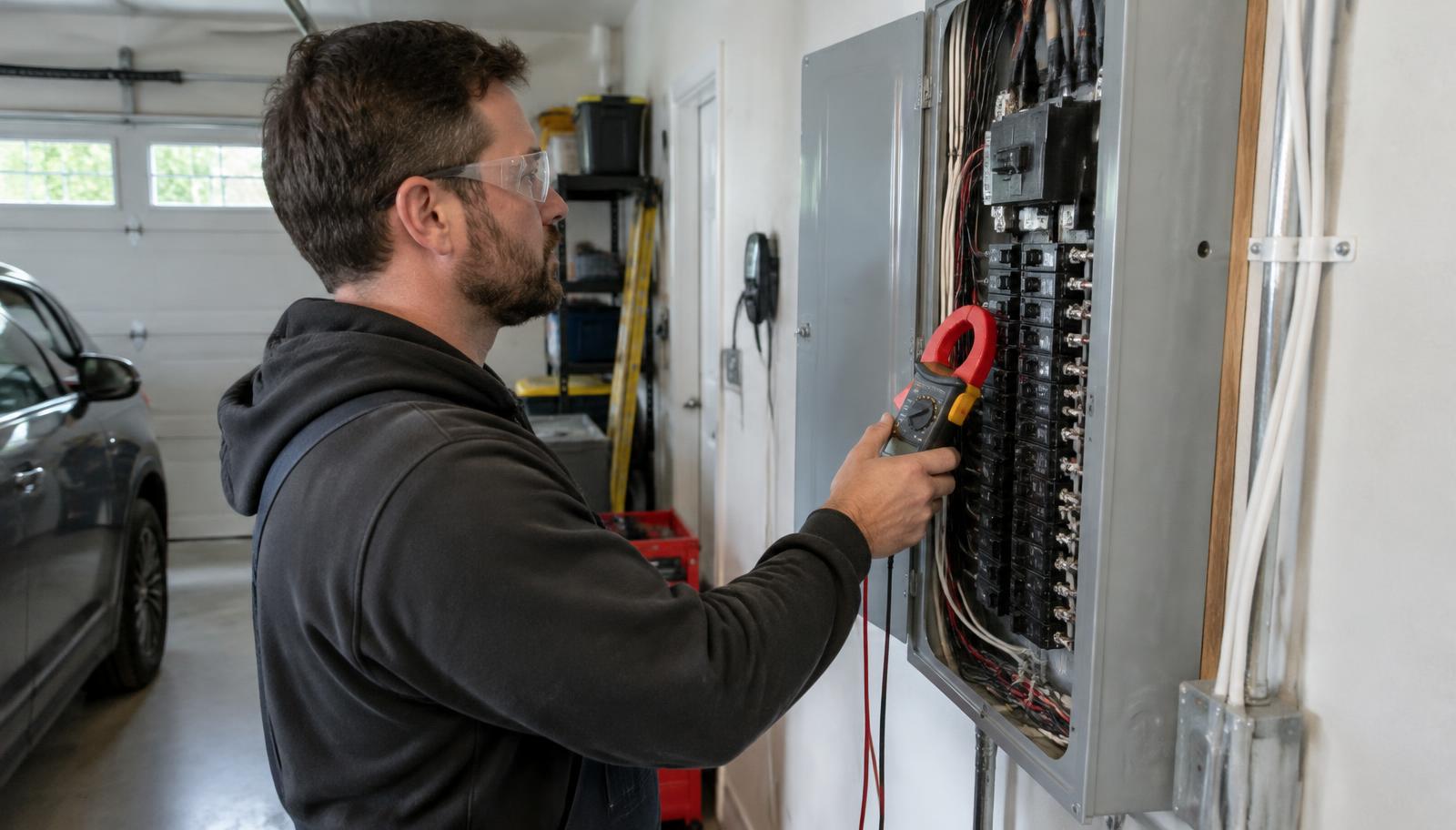
No. A panel upgrade is not automatically required to install a Level 2 EV charger. The answer depends on the electrical service, existing loads, available capacity, and proposed equipment.
When the existing panel may be sufficient
A home with suitable electrical capacity may support a correctly sized dedicated charging circuit without replacing the main panel. An electrician must confirm this using an appropriate load evaluation.
When an electrical upgrade may be necessary
A property with limited capacity may need a different approach, such as:
- Selecting a lower charging current
- Using approved energy-management equipment
- Modifying electrical distribution
- Upgrading electrical service when necessary
An older panel does not automatically require replacement, and a newer panel does not guarantee enough available capacity.
/Hardwired vs. Plug-In EV Chargers
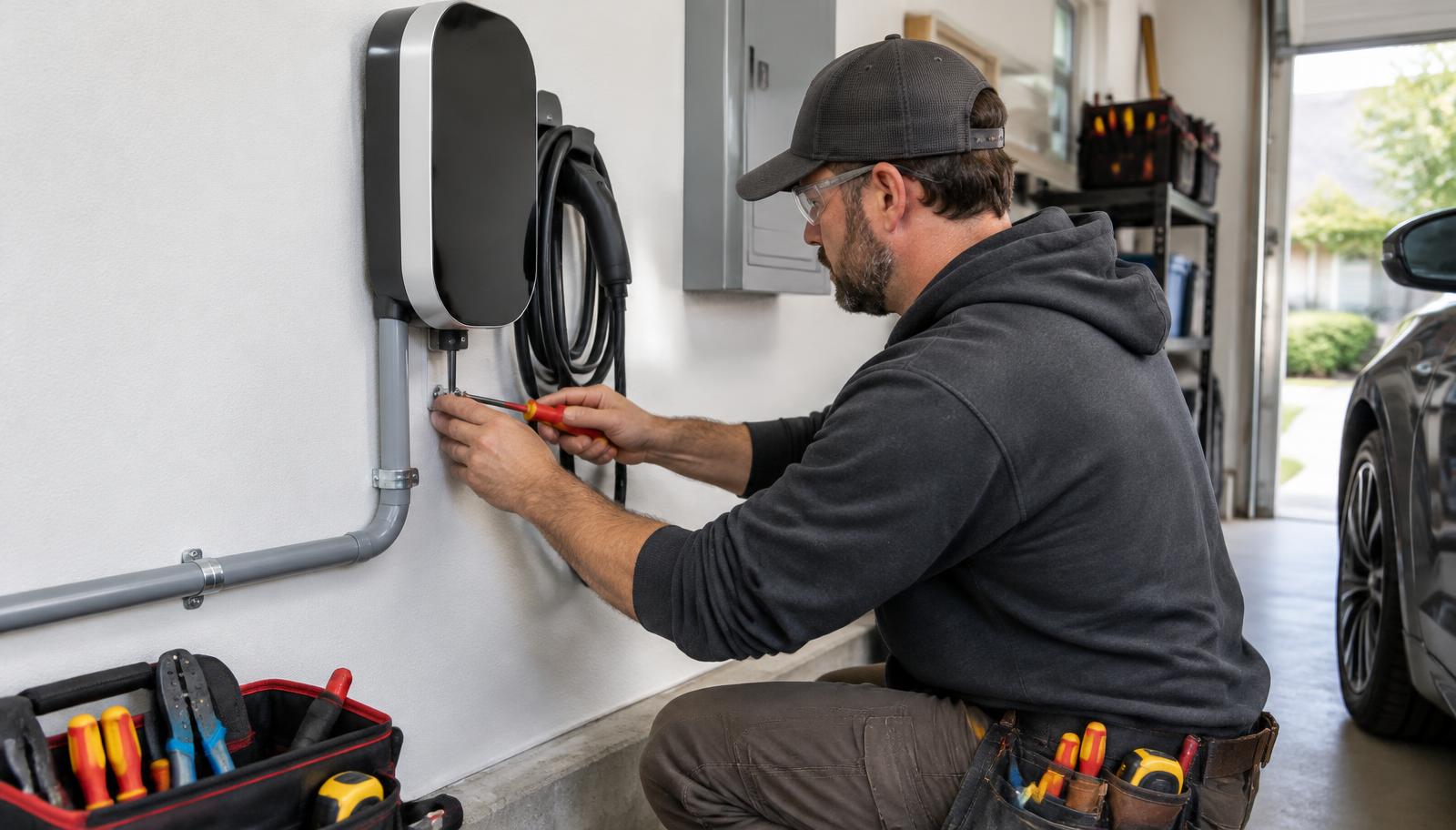
Hardwired EV chargers
A hardwired charger connects directly to an electrical circuit. This can be a good permanent option and may accommodate higher charging currents depending on design and equipment. It avoids relying on a receptacle connection.
Plug-in EV chargers
Some Level 2 chargers connect to a properly installed 240-volt receptacle. The receptacle, wiring, circuit protection, and charger must all be suitable. Not every existing 240-volt outlet is appropriate for EV charging.
A qualified installer can recommend the arrangement that fits your property.
/Where Should You Install Your Home EV Charger?
Placement affects daily convenience and installation complexity.
Inside the garage
Convenient when vehicles regularly park indoors and the panel is nearby.
On an exterior wall
Useful for driveways and properties without enclosed parking.
Near a detached garage
May require longer conduit routes, underground wiring, or additional infrastructure.
Consider charging-port position, cable reach, parking layout, environmental exposure, and future vehicles before finalizing placement.
/EV Charger Installation Permits in San Diego
The City of San Diego requires an electrical permit for EV charging installations. Its Information Bulletin 187 explains the relevant procedures.
Certain residential garage installations may qualify for a simplified process; other projects can require further review. Cities such as Chula Vista, La Mesa, and El Cajon may have different procedures. An installer should identify the correct permit and inspection requirements.
Reference: City of San Diego Information Bulletin 187
/What Affects EV Charger Installation Costs?
Distance from the panel
A nearby charger may need less wiring and labor than one across the property. Longer runs can require additional materials.
Panel capacity
If the existing electrical system supports the charger, the job may be straightforward. If load management, distribution changes, or a service upgrade is needed, cost increases.
Charger specifications
Different chargers have different circuit requirements, charging-current options, and connectivity features. The equipment selection matters.
Installation location
Exterior equipment, detached garages, and underground conduit routes can add complexity.
Permits and inspections
Required permitting and inspection responsibilities should be included in the project estimate.
A site-specific quote is more dependable than a generic online price estimate.
/Can Businesses Install EV Charging Stations Too?
Yes. Businesses, workplaces, multifamily properties, and fleets may install charging infrastructure. Commercial projects can involve multiple stations, shared capacity, networking, utility coordination, distribution upgrades, transformers, and trenching.
Benson Electric provides residential and commercial EV charger installation services throughout San Diego County.
/Frequently Asked Questions About EV Charger Installation
How much does home EV charger installation cost in San Diego?
It depends on panel capacity, charger location, wiring distance, equipment, and permitting. A site assessment supports a realistic quote.
Do I need a 200-amp panel for a Level 2 charger?
Not necessarily. A load calculation and the selected charging equipment determine whether the existing service is suitable.
Can I install a Tesla Wall Connector at home?
Yes, where the electrical system and installation conditions support it. Follow the manufacturer's instructions and applicable codes.
Does a Level 2 charger need a dedicated circuit?
Typically, yes. Charging equipment generally requires an appropriately designed individual branch circuit under applicable code and equipment requirements.
Is a permit required in San Diego?
Yes. The City of San Diego requires an electrical permit for EV charger installation. Other jurisdictions have their own processes.
/Schedule EV Charger Installation in San Diego With Benson Electric
Installing an EV charger at home should make your daily routine easier, not introduce electrical complications.
Benson Electric provides EV charger installation services for homeowners, businesses, and commercial properties throughout San Diego County. Our team can evaluate your panel, assess circuit requirements, and help plan a safe installation.
We serve San Diego, Lakeside, El Cajon, La Mesa, Poway, Chula Vista, Escondido, and surrounding areas.
Ready when you are
Get a Free EV Charger Installation Quote
Call Benson Electric at (619) 390-1922 or visit our EV charger installation page to request a free quote.
Get a free quote