Fiber optic cabling plays an important role in many high-performance networks. But installing fiber requires careful planning: cable types, pathways, terminations, testing, and future expansion all affect the installation.
For general contractors, property owners, and facility managers in San Diego, an experienced fiber optic contractor can help create dependable infrastructure for current and future connectivity needs.
/What Is Commercial Fiber Optic Installation?
Commercial fiber optic installation involves placing, routing, connecting, and testing fiber optic cables that transmit data using light between network equipment and locations.
Fiber is used for high-capacity connections across buildings, equipment rooms, and large properties. Commercial projects may include design and route planning, underground conduit, inside plant and outside plant cabling, cable pulling, fusion splicing, terminations, distribution panels, optical testing, and closeout documentation.
The scope depends on transmission distance, network design, equipment, and physical site conditions.
/When Should a Business Consider Fiber Optic Cabling?
Not every connection needs fiber. Copper Ethernet remains useful for many office devices and shorter runs. Fiber is especially valuable for long connections, high-capacity backbones, and links between separate buildings.
Connecting multiple buildings
Commercial campuses may require connections between offices, warehouses, laboratories, or other structures. Fiber can provide a practical backbone between building network rooms across distances less suitable for conventional copper Ethernet.
Supporting larger network backbones
Buildings with several telecommunications rooms may use fiber between a main distribution frame and intermediate distribution locations. That backbone supports networks throughout the facility.
Preparing for future equipment needs
A well-designed fiber infrastructure can support later equipment upgrades, provided the cable, pathways, transceivers, and system remain suitable. Planning should consider reasonable future capacity.
Serving specialized facilities
Healthcare campuses, government facilities, industrial sites, and research properties may require carefully documented communications infrastructure with specific reliability, access, and installation requirements.
/Inside Plant vs. Outside Plant Fiber
Inside Plant (ISP) Fiber
Inside plant fiber generally refers to cabling located within buildings, such as links between server rooms, distribution frames, telecommunications rooms, equipment locations, and floors. The design must account for building environments, appropriate cable ratings, pathways, and equipment organization.
Outside Plant (OSP) Fiber
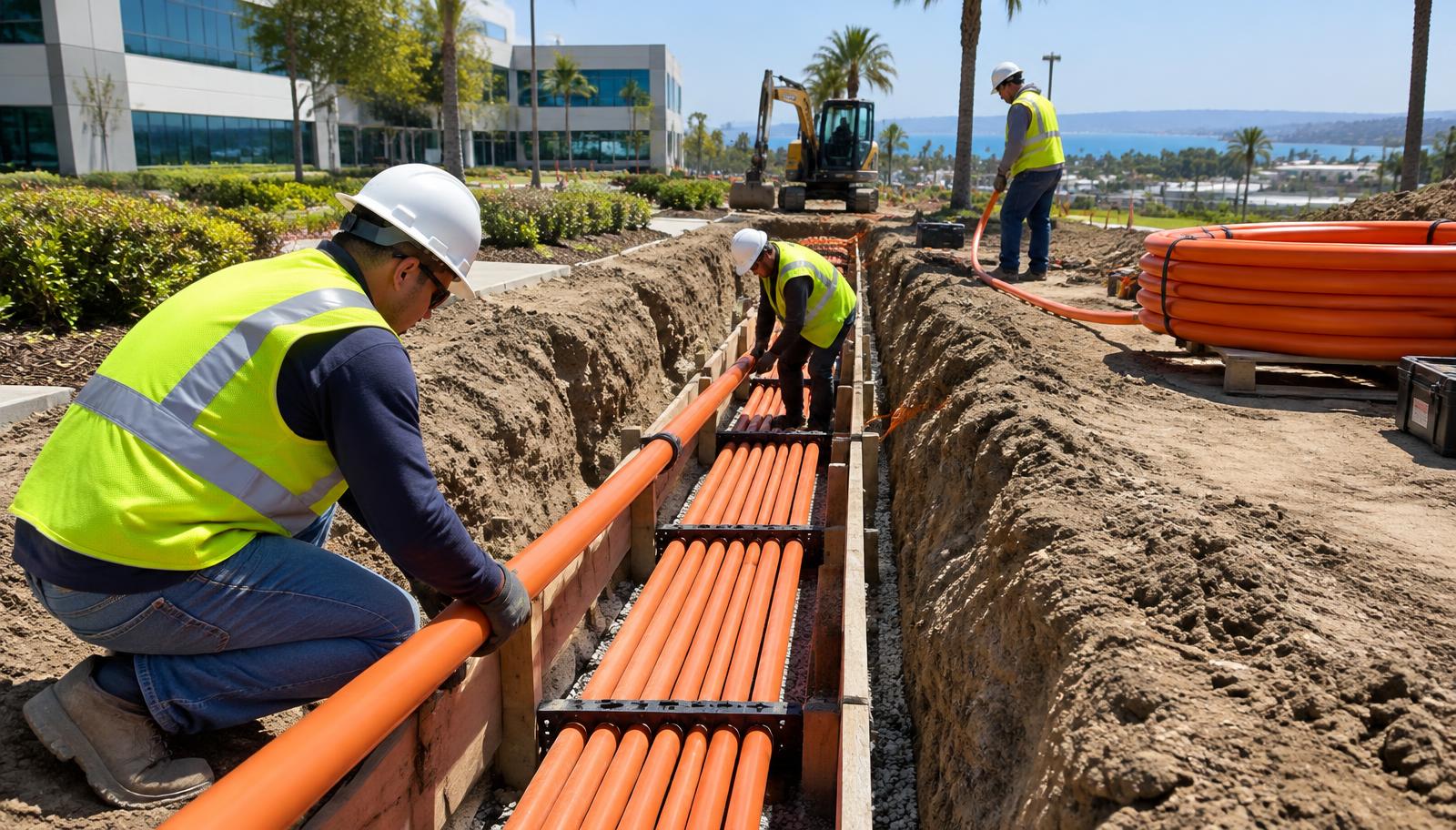
Outside plant fiber refers to infrastructure outside buildings, often involving underground conduit, duct banks, manholes, handholes, aerial routes, or inter-building connections. These projects require planning for environmental exposure, route protection, access, construction conditions, and any necessary permissions. Multi-building properties may need both ISP and OSP work.
/Single-Mode vs. Multimode Fiber: What's the Difference?
Single-mode fiber
Single-mode fiber is widely used for longer-distance links and suitable high-capacity optical connections. It is often selected for campus backbones, outside plant systems, and inter-building links. Performance depends on the optical equipment and overall design.
Multimode fiber
Multimode fiber is used for selected shorter-distance links, including some building and equipment-room applications. Distance and bandwidth depend on fiber category and compatible transceivers.
Which type is better?
Neither is automatically best. The contractor and network designer should consider required bandwidth, link distance, equipment compatibility, expansion plans, and overall project cost before selecting cable.
/Why Fiber Optic Splicing and Termination Matter
Fiber connections must be properly prepared and assembled to avoid excess optical signal loss and intermittent performance issues.
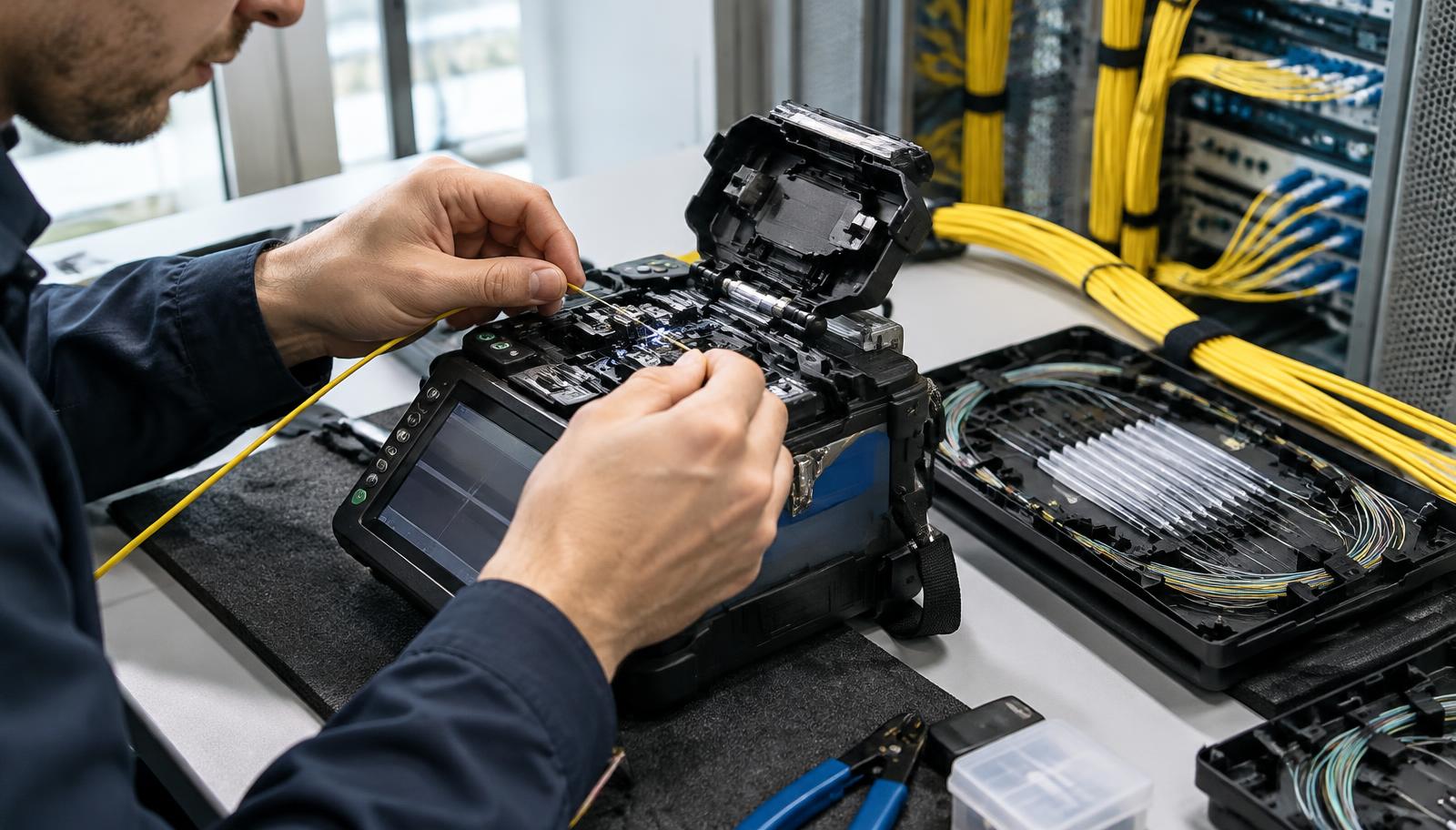
Fusion splicing
Fusion splicing joins prepared fiber ends with specialized equipment. It is commonly used where consistent, low-loss permanent connections are needed. Proper preparation, alignment, protection, and workmanship matter.
Fiber termination
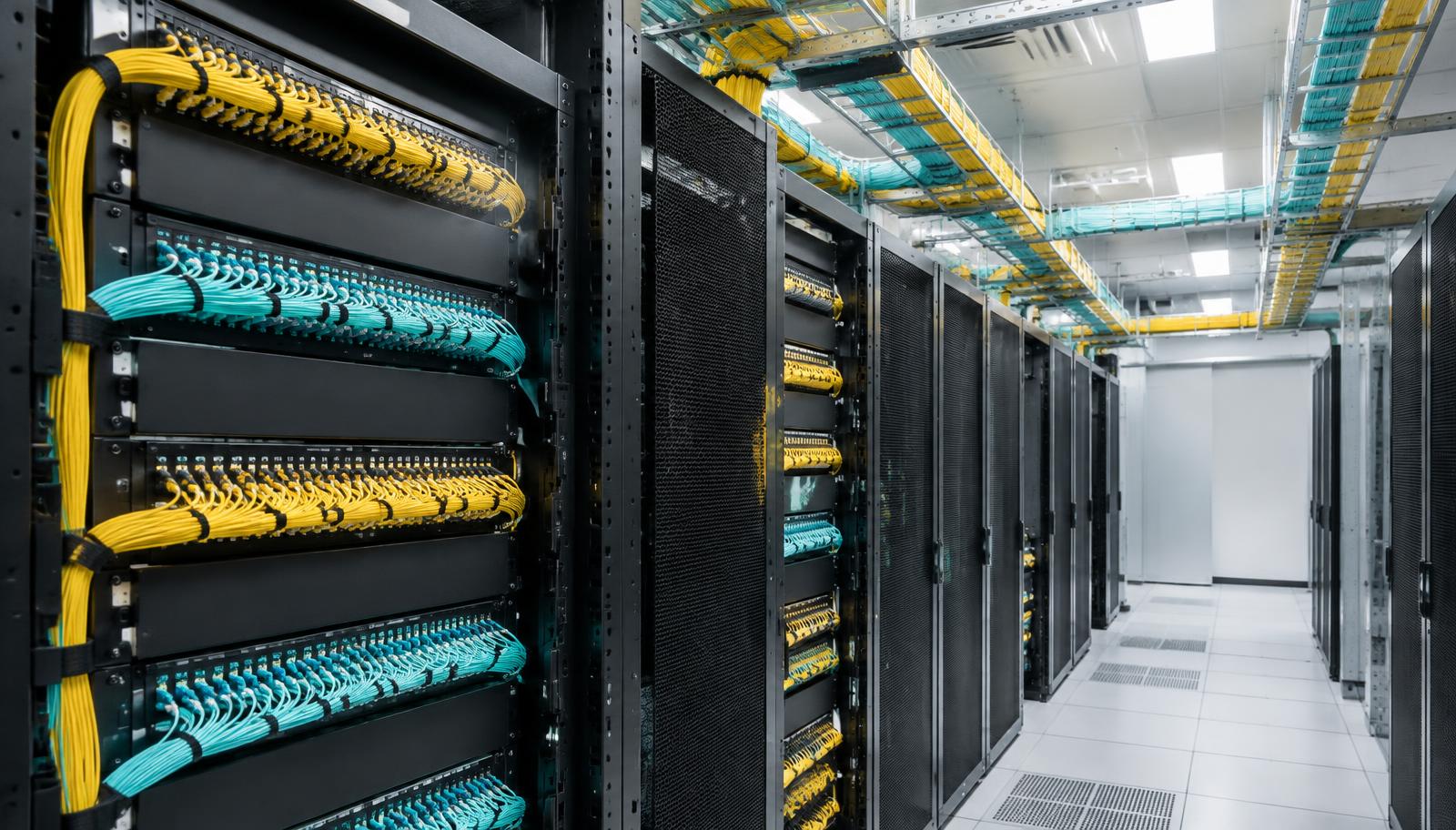
Terminations provide connection points to network equipment and patch cords. Connectors and methods must match the installation design. Organized patch panels and labeling simplify future maintenance.
/How Is Fiber Optic Cabling Tested?
Testing helps verify that links meet project requirements.
Optical loss testing
Optical loss testing measures light loss through an installed link and helps determine whether it meets the specified loss budget.
OTDR testing
An optical time-domain reflectometer (OTDR) analyzes reflections and backscatter along a fiber link. This helps technicians characterize events such as splices, connectors, and possible faults.
Documentation and certification
Closeout records should include appropriate test results and installation information. These help facility managers understand infrastructure, troubleshoot faults, and support future work. The testing scope should be defined in project specifications.
/Fiber Optic Installation for Commercial Construction Projects
Fiber installation should be coordinated with electrical construction and other trades. Confirm:
- Pathways: Conduit, trays, sleeves, and access points
- Scheduling: The best time to pull cable relative to excavation and finishing
- Protection: Suitable routing for the cable and environment
- Equipment areas: Rooms, panels, and termination points
- Testing: Required measurements and closeout records
- Expansion: Space and pathways for future connections
Early coordination reduces conflicts and costly changes after finishing work.
/How to Choose a Fiber Optic Contractor in San Diego
Before requesting a proposal, ask whether the contractor handles inside plant and outside plant work, installs required pathways, performs fusion splicing and terminations, provides optical testing, and supplies documentation.
Also ask about coordination with general contractors, permitting where needed, and scalability. Compare the complete installation scope, not just the price of cable pulling.
/Frequently Asked Questions About Commercial Fiber Optic Installation
What does a fiber optic contractor do?
A fiber optic contractor installs, splices, terminates, and tests fiber cables and supporting infrastructure. Some also handle underground or aerial routes and related construction.
Is fiber optic cabling better than copper?
Fiber has advantages for long-distance and high-capacity connections. Copper is still practical for many shorter-distance device and network links. Selection depends on the application.
How long does commercial fiber installation take?
Timing depends on cable distance, pathway availability, trenching, splicing, permitting, and testing requirements.
What is OTDR testing?
OTDR testing uses optical measurements to characterize a fiber link and identify events such as connectors, splices, and potential faults along the cable.
Can fiber connect multiple commercial buildings?
Yes. Fiber is commonly used as a backbone between separate buildings in commercial campuses and other network environments.
Do fiber optic projects require permits?
Requirements vary by jurisdiction and physical work, especially if installation involves trenching, conduit construction, aerial routes, or other regulated activities.
/Work With a Fiber Optic Contractor in San Diego
Reliable network infrastructure starts with careful planning and quality installation.
Benson Electric provides commercial fiber optic installation, inside plant and outside plant infrastructure, splicing, termination, testing, and certification.
Our team works with general contractors, property owners, facility managers, and organizations requiring dependable communications infrastructure. Based in San Diego County, Benson Electric supports local commercial work and can mobilize for qualifying projects nationwide.
Ready when you are
Discuss Your Fiber Optic Project
Call (619) 390-1922 or visit our fiber optics and CCTV services page to discuss your project and request a quote.
Get a free quote