Camera placement, cabling, network infrastructure, lighting conditions, and recording equipment all affect how useful the system becomes.
For offices, warehouses, retail stores, campuses, and property managers in San Diego, careful CCTV planning is an important step toward dependable security infrastructure.
/What Is Commercial CCTV Installation?
Commercial CCTV installation involves planning and installing surveillance cameras, supporting cabling, recording equipment, and related network infrastructure to monitor designated areas of a business property.
A system may include:
- Indoor and outdoor security cameras
- Network video recorders
- Power over Ethernet network switches
- Structured network cabling
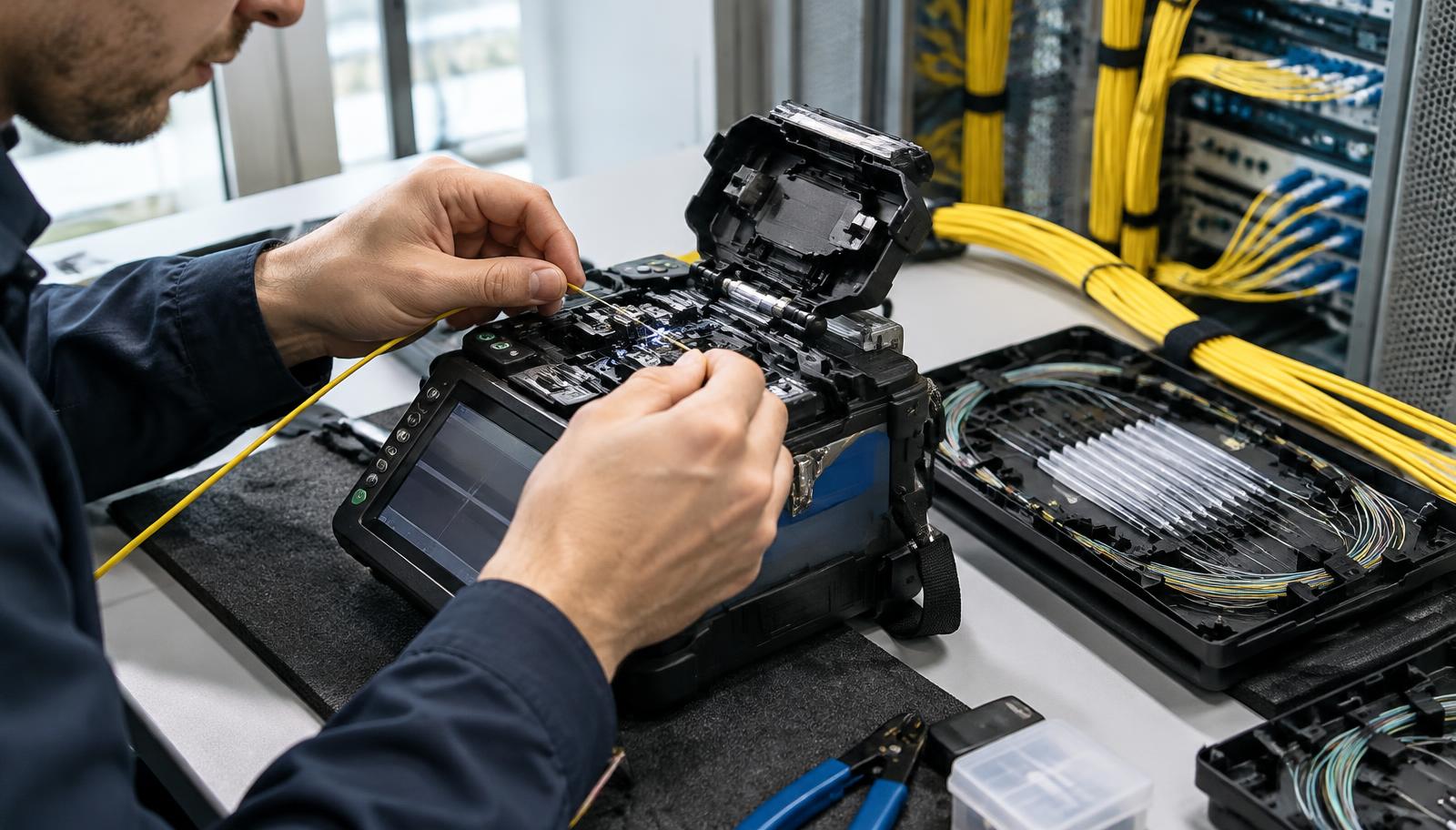
- Fiber optic connections for larger properties
- Network and equipment cabinets
- Storage systems
- Secure network access
- System testing and documentation
The correct configuration depends on the site's size, monitoring needs, existing infrastructure, and operating requirements.
/Why Camera Placement Matters More Than Camera Count
More cameras do not automatically produce better coverage. A poorly positioned camera may show an incomplete scene or fail to capture useful details.
Entrances and exits
Doors are often priority locations. Installers need to account for camera angle, lighting changes, and obstructions. Strong backlighting at an exterior doorway, for example, may require appropriate image-processing capability.
Parking areas and building exteriors
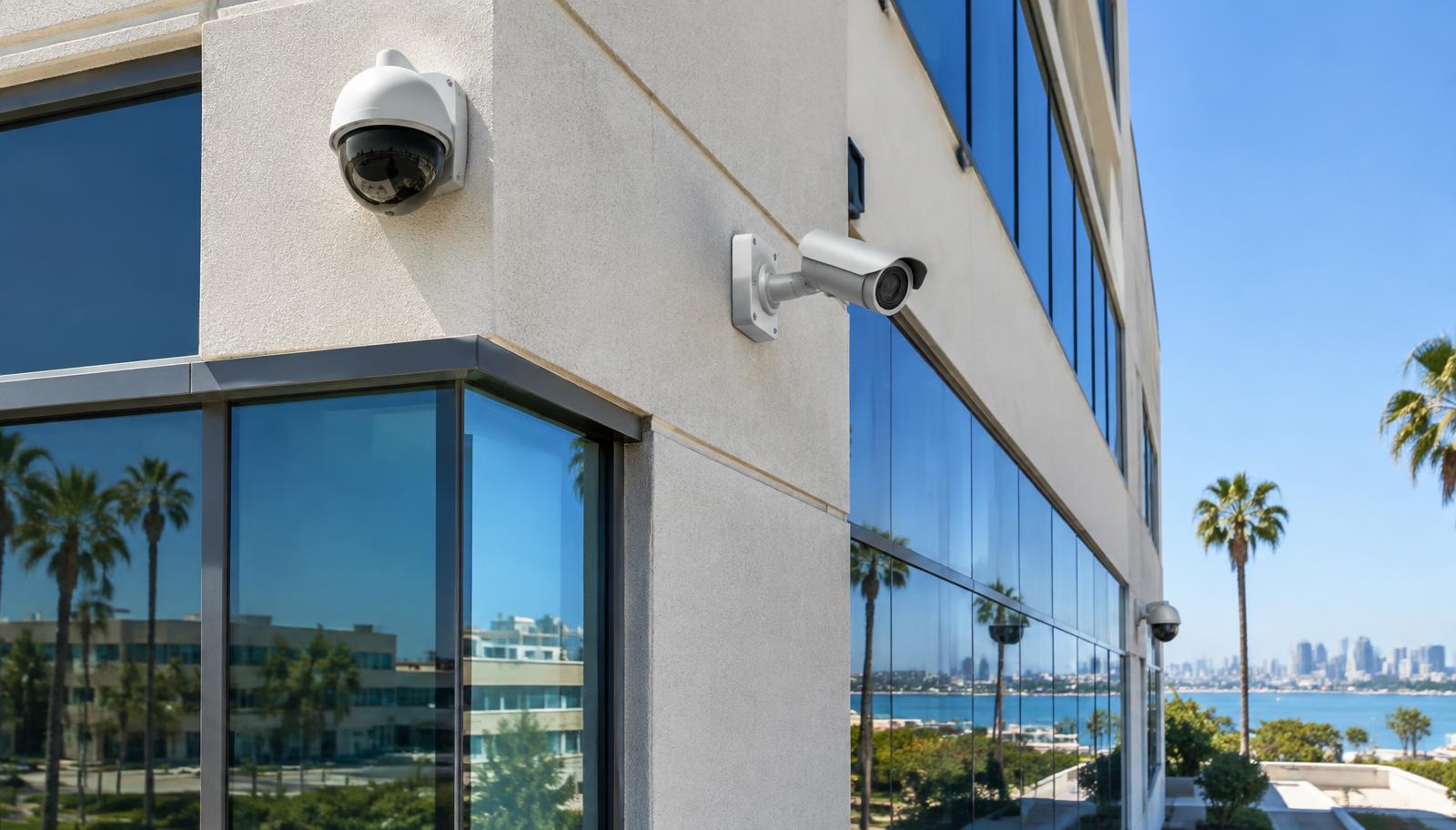
Exterior cameras can help monitor access points, parking areas, and loading zones. Nighttime visibility, weather exposure, mounting height, and distance to the intended subject all matter.
Warehouses and storage facilities
High ceilings, shelving, and machinery can block views. Coverage should be planned around the specific activities and areas the business needs to monitor.
Offices and common areas
Office buildings may use cameras in entrances, reception areas, and common spaces. Installations should respect applicable privacy obligations. Businesses should consider legal requirements involving audio recording, notices, employee privacy, and sensitive areas.
/Wired vs. Wireless Security Cameras for Businesses
Wired CCTV systems
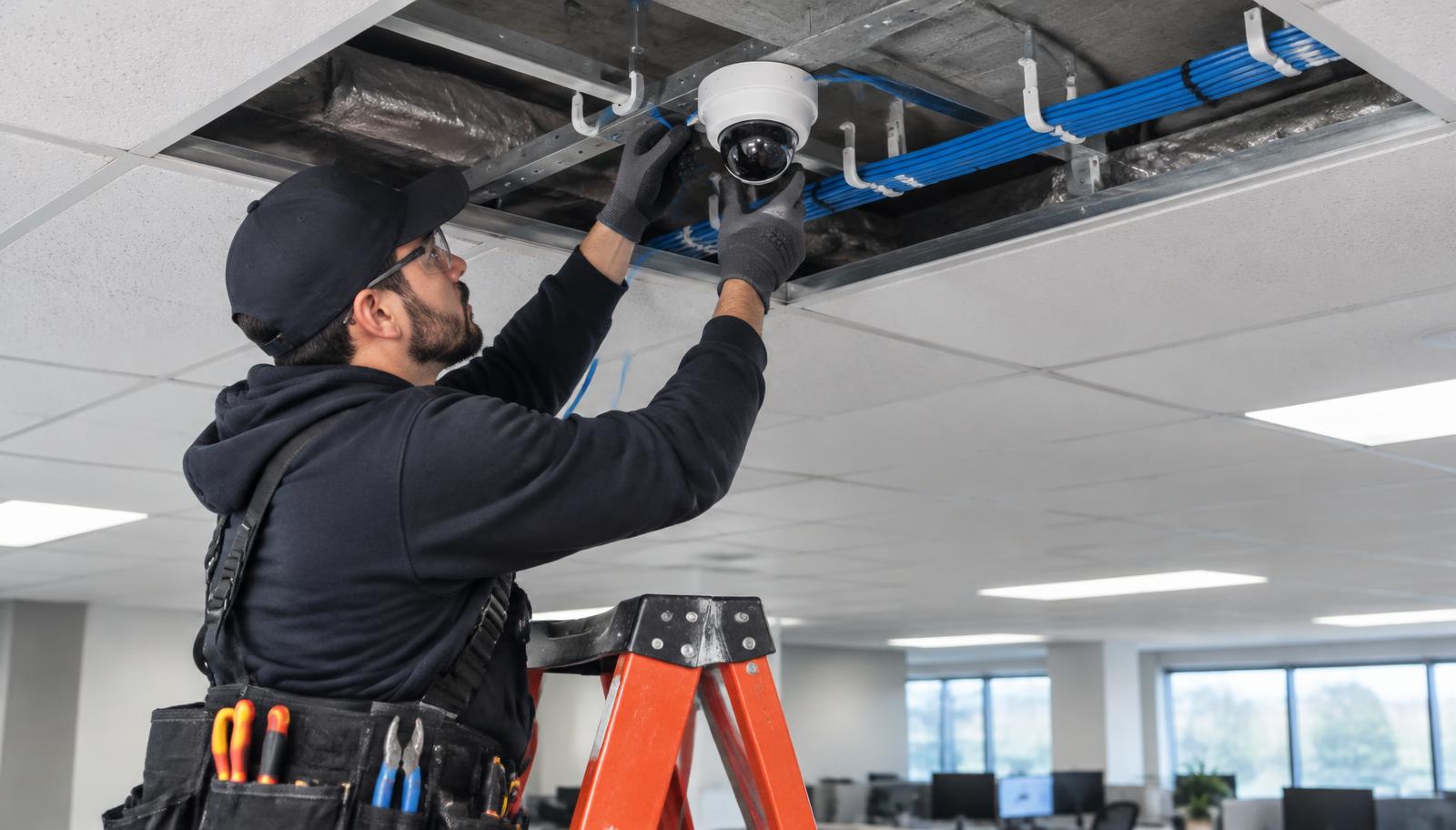
Wired cameras rely on installed cables for connectivity and, with many IP cameras, power. Power over Ethernet (PoE) can provide power and network connectivity through an appropriate cable. Properly designed wired systems may offer reliable connectivity, centralized management, organized infrastructure, and easier expansion. The tradeoff is the need to plan and install cable pathways.
Wireless CCTV systems
Wireless cameras transmit data over a wireless network. They can be useful in some situations, but performance can be affected by obstructions, interference, and network congestion. Many wireless cameras still need a power source.
For larger commercial properties, a wired or hybrid system is often worth evaluating.
/How Low-Voltage Cabling Supports CCTV Reliability
Security systems depend on the cabling, conduit, equipment cabinets, and network devices connecting cameras to recording infrastructure.
A good installation plan should address:
- Cable routes: Pathways through walls, ceilings, equipment rooms, and exterior areas
- Protection: Conduit or other protection where required by the environment
- Distance: Cable-length limitations and suitable network technology
- Power: Reliable supplies for cameras and network hardware
- Network capacity: Switches, uplinks, and video traffic
- Expansion: How additional cameras will connect later
Fiber optic infrastructure can be suitable for backbone connections across large properties or between buildings. A low-voltage contractor can coordinate this infrastructure during new construction or remodeling.
/What Should Businesses Know About CCTV Recording and Storage?
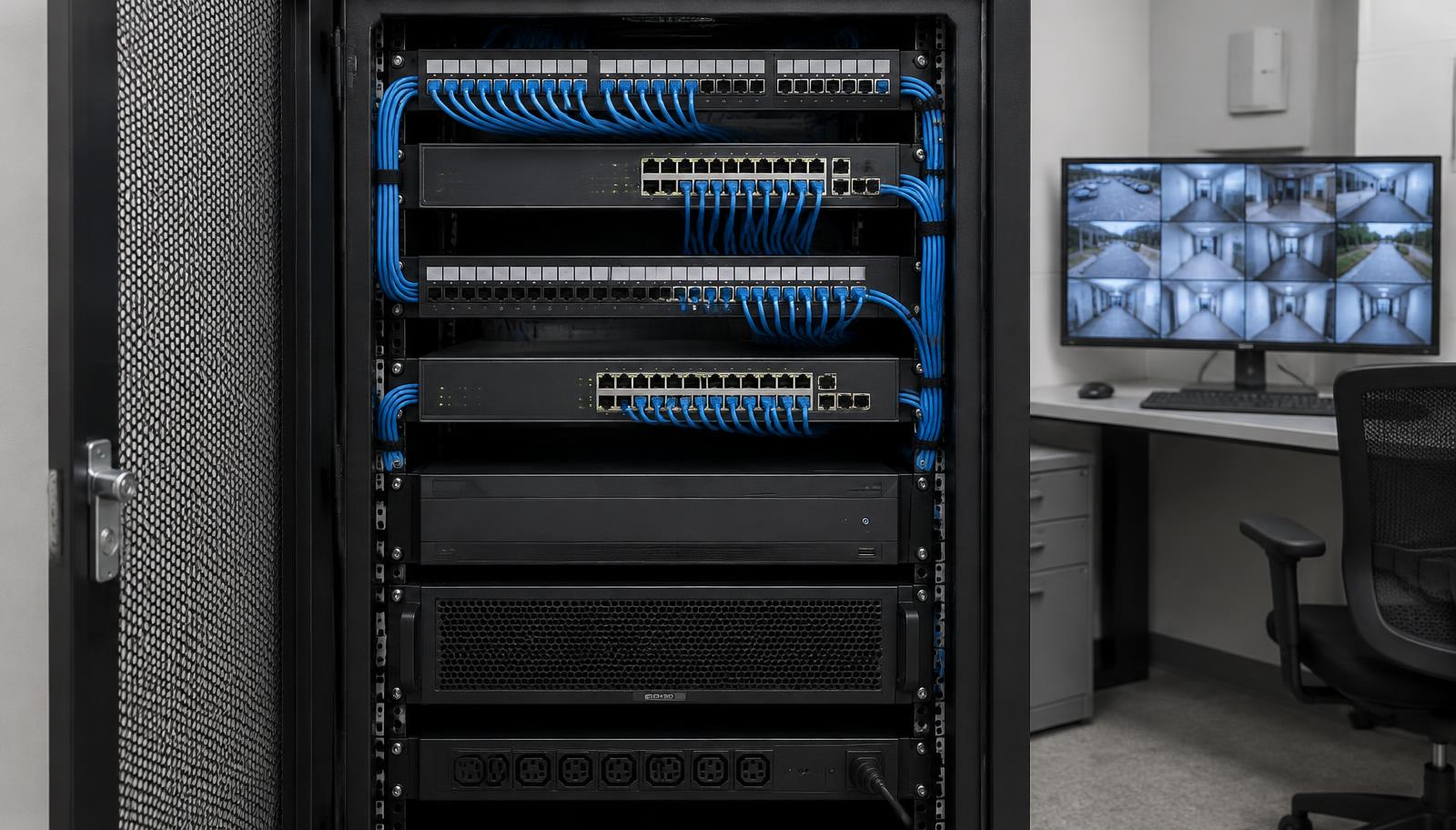
A camera system is only useful if footage is recorded and retained appropriately. Storage requirements depend on the number of cameras, image resolution, frame rate, recording schedule, compression, and retention policy.
Before selecting equipment, decide:
- How many cameras will record at once?
- Will recording be continuous or event-based?
- How long should footage be kept?
- Who can access and export recordings?
- What happens if a recorder or drive fails?
Secure passwords, access controls, software updates, and network segmentation should also be considered to help protect network-connected surveillance devices.
/CCTV Planning for New Construction and Commercial Renovations
Construction is a good opportunity to prepare security infrastructure before finishes are installed. Teams can coordinate conduit to camera locations, cable pathways above ceilings, network cabinets, electrical power for recording equipment, fiber backbones where appropriate, and expansion capacity.
Planning reduces the chance of reopening finished walls later. Property managers should also consider access for equipment maintenance and troubleshooting.
/How to Choose a CCTV Installation Contractor in San Diego
Start with monitoring goals, not a generic camera package. Evaluate whether the contractor has experience with comparable commercial sites, understands structured cabling, coordinates with other trades, and provides useful documentation.
Discuss the number of cameras, coverage priorities, wiring pathways, storage expectations, and possible expansion. A clear scope makes proposals easier to compare.
/Frequently Asked Questions About Commercial CCTV Installation
How much does commercial CCTV installation cost in San Diego?
It depends on camera quantity and type, site size, cabling complexity, recording hardware, and integration needs. A site assessment is the best basis for an estimate.
Are wired cameras better for businesses?
They can provide dependable connectivity when designed properly, although the best arrangement depends on site conditions and operational needs.
Can CCTV cameras connect through fiber optics?
Yes. Fiber can carry network connections between buildings or equipment areas, with suitable network devices connecting the fiber backbone to camera systems.
Do commercial cameras need internet access?
Not always. Some systems can record locally without continuous internet access. Remote access and cloud-dependent features may require it.
Can CCTV cabling be added during a renovation?
Yes. Renovations are an opportunity to install pathways and equipment space before finished surfaces make access more difficult.
/Plan Your Commercial CCTV Infrastructure With Benson Electric
A dependable surveillance system starts with properly designed infrastructure.
Benson Electric provides commercial low-voltage services, structured cabling, fiber optic infrastructure, and CCTV and security infrastructure for facilities throughout San Diego County.
Our team can help general contractors, property owners, and facility managers plan the physical infrastructure for camera systems. We support projects in San Diego, Chula Vista, La Mesa, El Cajon, Poway, Escondido, and nearby communities.
Ready when you are
Request a CCTV Project Quote
Call (619) 390-1922 or explore our fiber optics and CCTV services to request a project quote.
Get a free quote