Fiber optic cable carries data as light through strands of glass, which makes it fast and reliable over long distances. It also means installation has to be done carefully.
/Why Fiber Installation Is Different From Copper
Unlike copper data cable, fiber can be damaged by pulling too hard or bending too tightly. Every connection point also adds a small amount of signal loss. A good installation plans for all of this before the first cable is pulled.
Commercial fiber work usually falls into two types: outside plant (underground or between buildings) and inside plant (within a building). The steps overlap, but the methods are different.
/Step 1: Scope and Route Planning
Every fiber project starts with the drawings and the scope. The installer confirms where each run starts and ends, how many strands are needed, and whether the job calls for single-mode or multimode fiber.
- Single-mode fiber is typically used for long runs, such as between buildings or across a campus.
- Multimode fiber is common for shorter runs inside a building, such as between telecom rooms.
- Route planning identifies pathways, pull points, existing utilities and the spare capacity needed for future growth.
/How Fiber Is Installed Underground
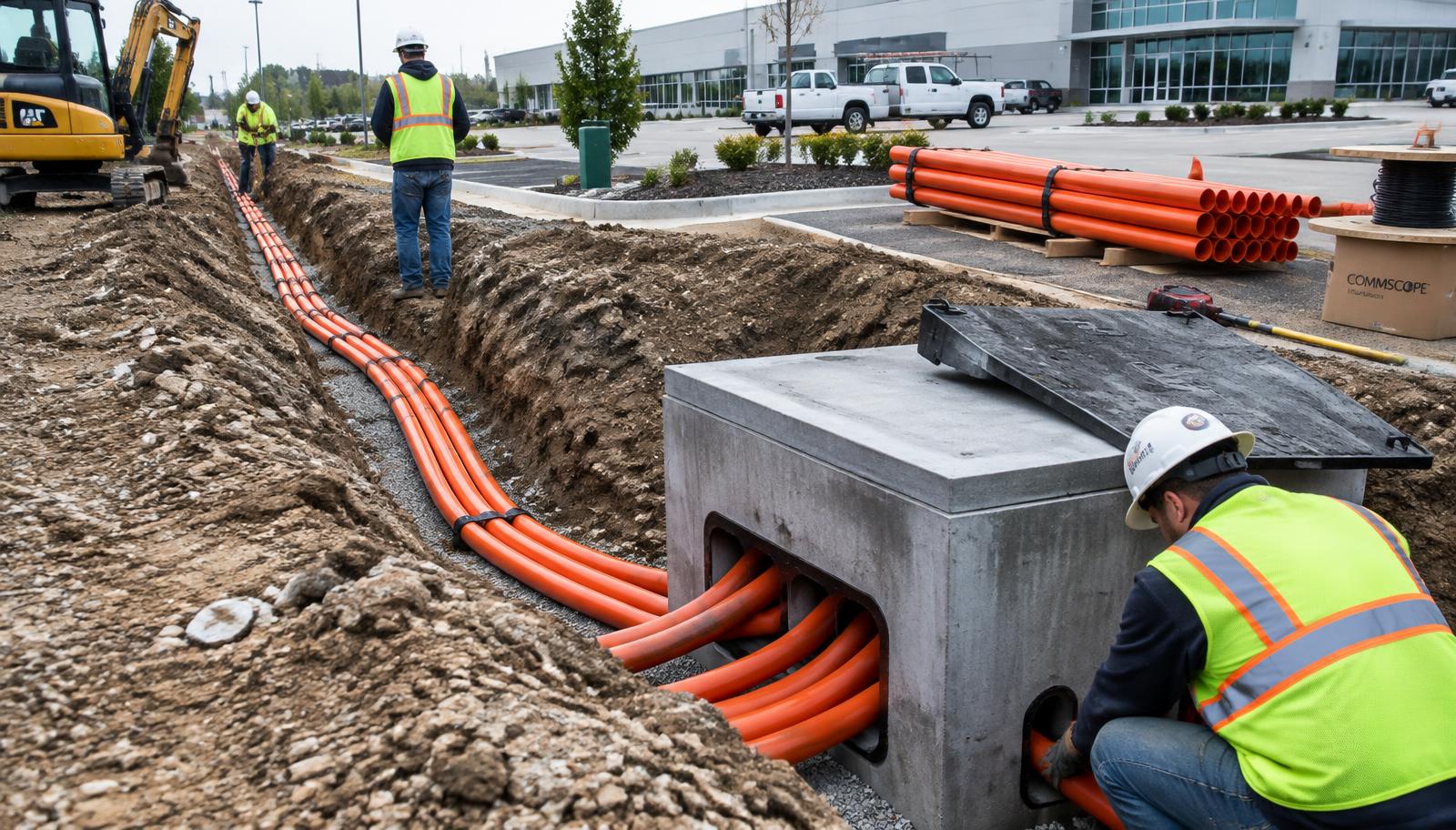
Underground fiber is almost always placed inside conduit or innerduct rather than buried directly. Conduit protects the cable and makes it possible to add or replace cable later without digging again.
Trenching or directional boring
Conduit is placed in an open trench or pulled through a bore path under roads, landscaping and parking areas. Before any digging, underground utilities are marked through the 811 call-before-you-dig process.
Pull boxes and vaults
Pull boxes or vaults are installed at intervals and at turns so the cable can be pulled in manageable sections and accessed for future maintenance.
Pulling the cable
Fiber is pulled with a pull line, lubricant and tension control so it stays within the manufacturer's maximum pulling tension and bend radius. Slack loops are left in vaults for future repairs and re-terminations.
/How Fiber Is Installed Inside a Building
Inside a building, fiber typically runs between the main telecom room and the floor or tenant telecom rooms (the backbone), and sometimes out to equipment and workstations.
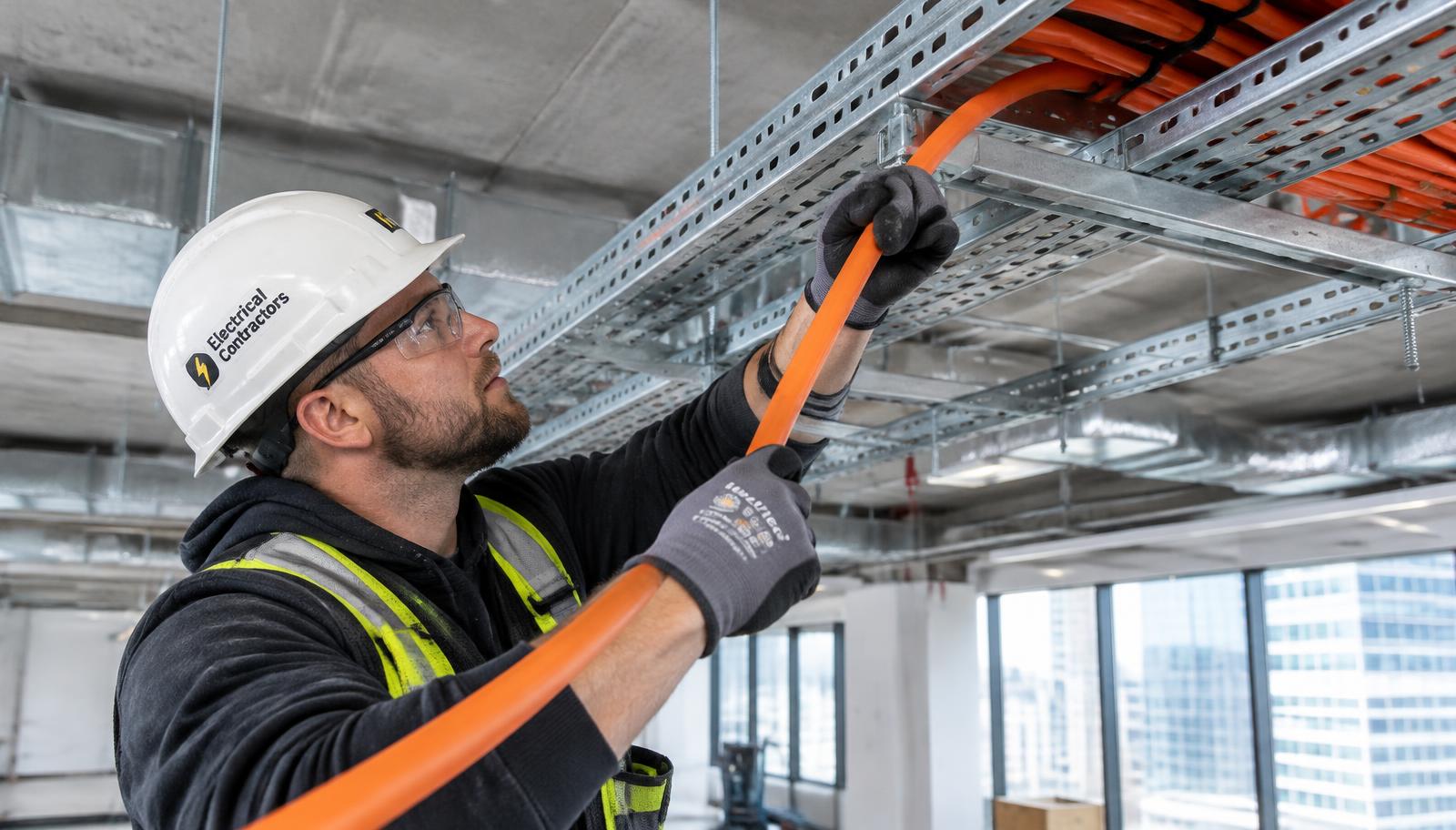
- Pathways such as cable tray, conduit and innerduct keep fiber separated and protected.
- Cable rated for the space is used, such as plenum-rated cable above ceilings that carry air.
- Penetrations through fire-rated walls and floors are sealed with approved firestopping.
- Every cable is labeled at both ends so it can be traced later.
/Step 2: Splicing and Termination
Once the cable is in place, the strands have to be joined and connected. Fusion splicing uses a precision machine to weld two fiber strands together with very low loss. Splices are protected in splice trays inside enclosures or panels.
At the ends of each run, fibers are terminated in patch panels, usually with factory-made pigtails spliced onto the cable. Clean, well-organized termination makes the system easier to maintain and expand.
/Step 3: Testing and Certification
Fiber isn't finished until it's tested. Two common tests confirm the installation performs as designed:
- Optical loss testing (OLTS) measures total signal loss end to end and compares it to the allowable loss for the link.
- OTDR testing maps the full length of the cable and shows each splice, connector and any problem point along the run.
- Test results, labels and as-built records are handed over so the owner has documentation for warranty and future work.
/How Long Does a Commercial Fiber Installation Take?
It depends on the scope. A backbone run inside one building may take a few days, while underground runs between buildings depend on trenching or boring, permits and site conditions. Your installer should give you a schedule based on your drawings.
/Planning a Fiber Project in San Diego?
Benson Electric installs, splices, terminates and certifies single-mode and multimode fiber for commercial, government and federal projects across San Diego County and nationwide. Send us your drawings and scope and our team will follow up with a bid.
Ready when you are
Get a Bid on Your Fiber Optic Project
Send us your drawings, scope and schedule. Call (619) 390-1922 or request a quote.
Get a free quote